
Like energy, water is integral to operational processes but is becoming increasingly costly and scarce. Anglo American Platinum has stepped up efforts to reduce the company’s reliance on potable water and conserve this precious natural resource.
In the 1990s, large mines were amongst the first to convert from analogue to electronic devices for the metering of electrical energy as costs rose. In similar fashion, the cost of water is driving the measuring and monitoring of water use from analogue meters into the electronic domain, with time-of-use consumption data offering similar benefits for water use awareness as it did for energy savings.
Measuring enables savings by controlling usage.
Anglo American Platinum has set itself targets to reduce reliance on potable water by 25% and increase water re-use to more than 65% for its operations by 2030. These operations will include the precious and base metal refineries, Anglo Converting Plant, and the smelter.
Anglo American Platinum has set itself targets to reduce reliance on potable water by 25% and increase water re-use to more than 65% for its operations by 2030. These operations will include the precious and base metal refineries, Anglo Converting Plant, and the smelter.
- Water meters at the main intake points which are external to the plant perimeters, using Lora wireless transmitters, and
- Water meters inside the plants, using its own SCADA systems.
These water usage data streams are then replicated into BBEnergy’s Wabbit software for aggregation and representation. The Wabbit software was originally developed for energy monitoring and data analysis, but this sophisticated technology is equally suited for measuring use of water or fuels, waste generated, and carbon.
Anglo American Platinum’s requirements for ensuring water security are to:
- Measure water use over time intervals of hours, days, or months to set, track and achieve reduction targets.
- Monitor the size and availability of main and alternative water sources, for flexibility in controlling water inflow.
- Report performance to users and stakeholders via direct access to data, graphs, reports, analytics and dashboards.
Wabbit is used as the digital tool to achieve these water security targets by:
- Retrieving and aggregating the water data in intervals ranging from 5 to 60 minutes, depending on the source.
- Showing daily data availability reports for support personnel to monitor the health of the water monitoring system, and thereby ensure a sustainable water supply to the mining operations.
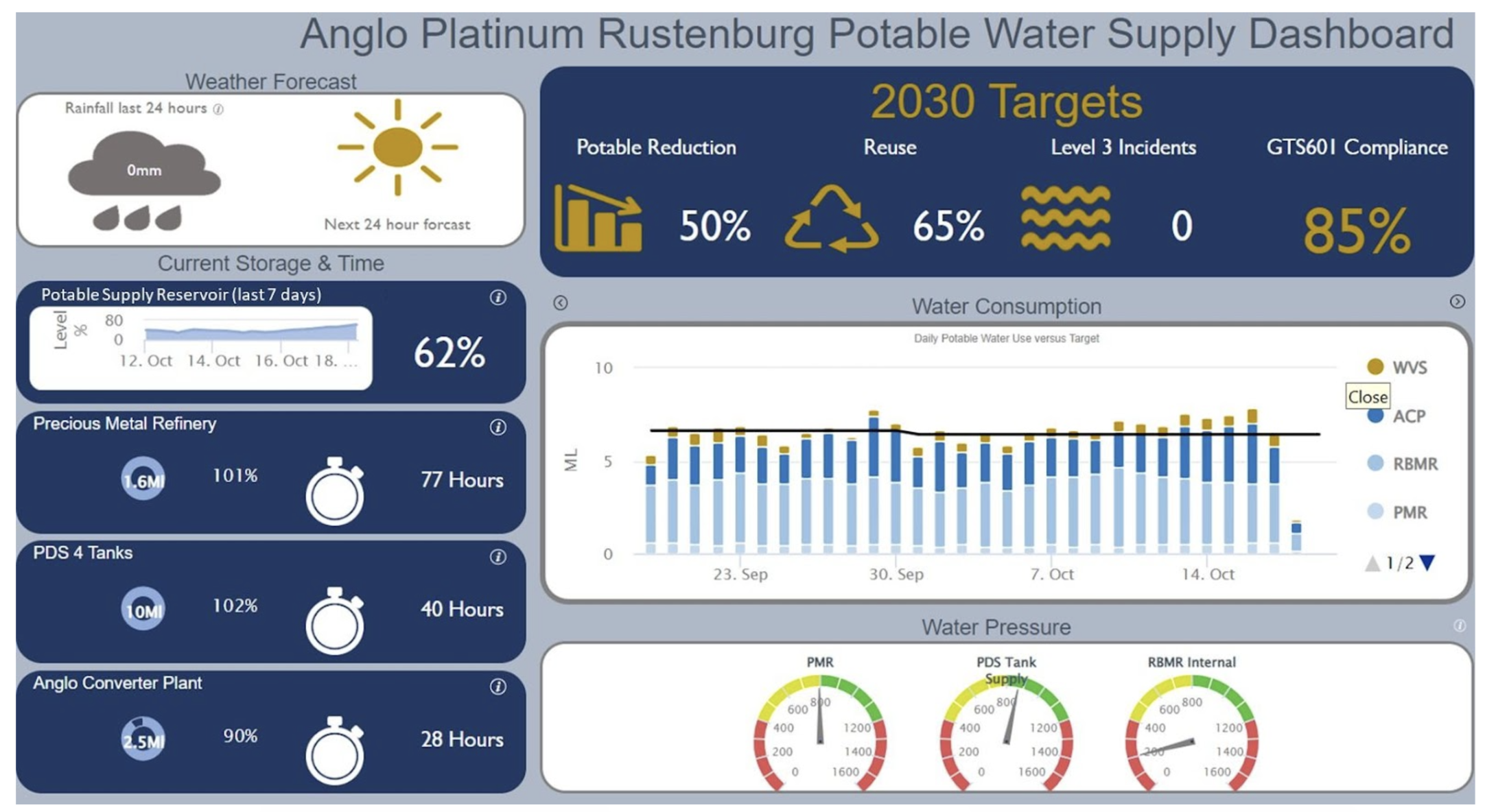
- Showing the Anglo American Platinum Potable Water Security Dashboard (see figure below), which tracks:
-
- 2030 target water usage metrics
- Rainfall and weather data, which influences the water available in the local dams as well as informing discharge decisions to prioritise process use.
- Monitoring available water reserves stored in internal reservoirs
- Historic water use over or under targeted volumes, allowing for forward planning:
- Hourly potable water usage for last 24 hours.
- Daily potable water usage for last 7 days against target.
- Monthly potable water usage for YTD against target.
- Rand Water’s water pressure readings in real-time and for the last eight hours, enabling personnel to implement alternative actions if any water sources are too weak.
-
Achieving water savings in a large and complex organisation is not an easy task.
The only way this can be done reliably is to ensure that monitoring and measurements make sense in relation to what is being controlled. Applying the same tools and techniques that have been tried and tested in the energy domain makes this seemingly daunting task a little easier by producing valuable data that can inform necessary actions for ensuring water security. BBEnergy is making that happen for this leader in the South African mining industry.
